
Many of the patients who travel to ELZA have already seen one or more specialists closer to home. Some have been told their cornea is too thin for cross-linking. Some had a procedure elsewhere that did not produce the expected result. Some have a presentation that simply does not fit the standard treatment pathway. ELZA exists, in part, for exactly these patients.
What's Possible
If you are reading this page, there is a good chance your situation is not straightforward. You may have spent months – or years – trying to find a clear path forward. You may have received conflicting opinions. You may have been told that nothing more can be done, or that the risk of further treatment outweighs the potential benefit, that your case is too “complex”.
The word “complex” covers a wide range of situations. At ELZA, we regularly evaluate and treat patients whose cases fall into one or more of the following categories:
The full picture
ELZA’s capacity for complex cases is not incidental. It is a direct consequence of the way the clinic operates – as both a clinical practice and an active research center. When a team is producing the science that defines treatment boundaries, they are also, constantly, encountering and documenting the cases that sit at or beyond those boundaries.
The ELZA-sub400 protocol was not developed in the abstract. It was developed because patients were arriving with corneas too thin for conventional treatment, and the team found that with modified riboflavin formulations, adjusted UV parameters, and careful pre-operative planning, cross-linking could be performed safely and effectively below the conventional threshold. That protocol is now used by corneal specialists around the world. At ELZA, it was born from the clinical reality of seeing patients that other clinics could not help.
The same logic applies to ELZA-PACE, the clinic’s customized cross-linking protocol, which adjusts treatment parameters individually based on each patient’s corneal topography, thickness profile, and progression data rather than applying a fixed protocol to every case. For patients with atypical presentations, this individualization is not a luxury – it is often the difference between a successful outcome and a missed opportunity.
Other Ophthalmologists Send Their Hardest Cases Here
One of the clearest indicators that a clinic is genuinely equipped for complex cases is not what it says about itself – it is what other doctors do.
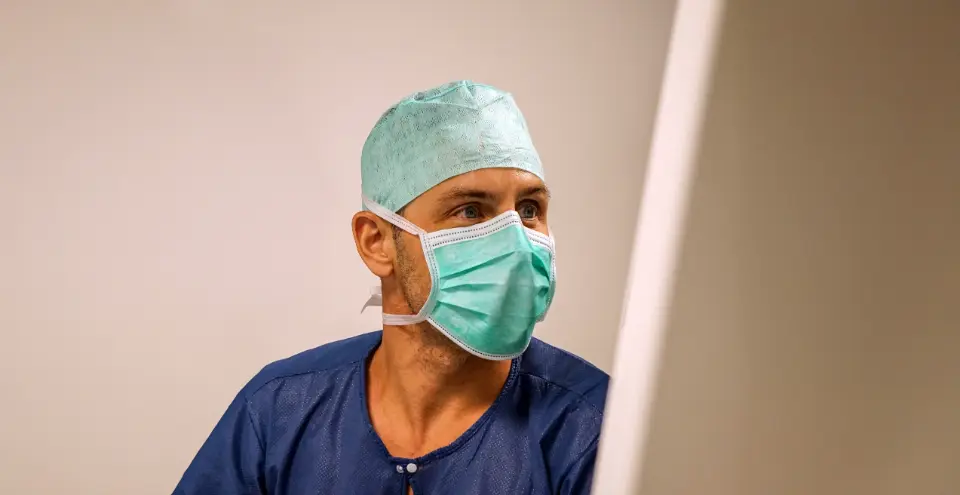
ELZA regularly receives referrals from ophthalmologists in other countries. These are not routine cases that any local specialist could handle. They are the cases where a treating physician has reached the limits of the protocols available to them, and has chosen to refer their patient to a team they believe has the expertise and the tools to go further.
For you as a patient, this is relevant in two ways. First, it means our team has seen a wider range of complex and unusual presentations than a practice that treats primarily straightforward cases. Second, it means that if you come to ELZA after an unsatisfactory experience elsewhere, you will be assessed by specialists who are accustomed to building on, and critically evaluating, prior clinical decisions – not just confirming them.
If your own ophthalmologist is willing to refer you, we are also happy to communicate directly with them during and after your evaluation, so that your care is coordinated rather than fragmented.
Second Opinion
If you have been told that your case is beyond treatment, or that further intervention carries too much risk, a second opinion from ELZA is a reasonable and accessible next step – and it does not necessarily require immediate travel.
Our specialists regularly review cases submitted remotely by international patients: corneal topography, tomography, pachymetry maps, surgical records, and prior imaging. Based on this material, we can usually provide a substantive assessment of whether the conclusions reached elsewhere align with our own clinical judgment, and whether alternative approaches merit consideration.
This assessment is not a formality. It is performed by the same specialists who see patients in the clinic. If the conclusion is that the prior recommendation was correct and nothing more can be offered, we will say so honestly. If there is a viable alternative, we will outline it clearly.
Either way, you will know that the assessment reflects the deepest available expertise in your condition.
Entrar em contacto
Most international patients start with a remote review of their existing scans, or an online video consultation with one of our specialists. This costs you nothing but time, and gives you a clear picture of whether a visit to ELZA makes sense for your situation.
Address
Instituto ELZA AG
Weinbergstrasse 16
8001 Zurich, Switzerland
+41 44 741 81 81
international@elza-institute.com
Start Your Case Review
Mantenha-se informado & receba o boletim informativo
Aderiu com sucesso à nossa lista de subscritores.
Receber e informar sobre o boletim informativo
Eles estão a ser bem sucedidos na nossa lista de contactos.
Por favor, melhore a sua assinatura, ao clicar no link do e-mail, que nós já enviámos.