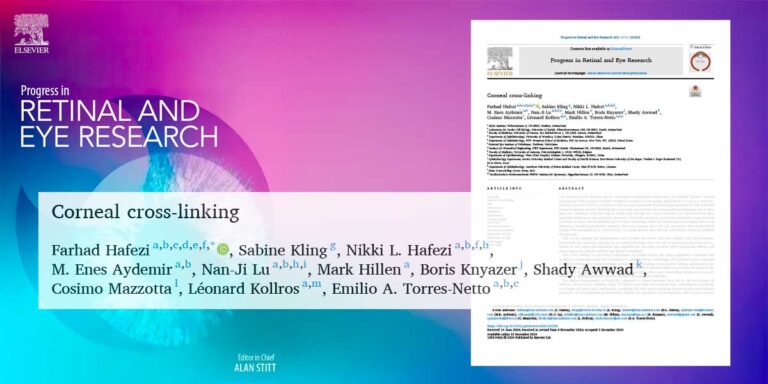
Our latest review on corneal cross-linking (CXL), published in Progress in Retinal and Eye Research, explores its evolution, advanced protocols like ELZA-PACE, and clinical applications.
In a recently published case report in American Journal of Ophthalmology Case Reports, our team, in collaboration with Brazilian colleagues, describes an unusual case of a “CTK-like syndrome” following sequential intracorneal ring segment (ICRS) implantation and corneal cross-linking (CXL) in a young patient with progressive keratoconus.
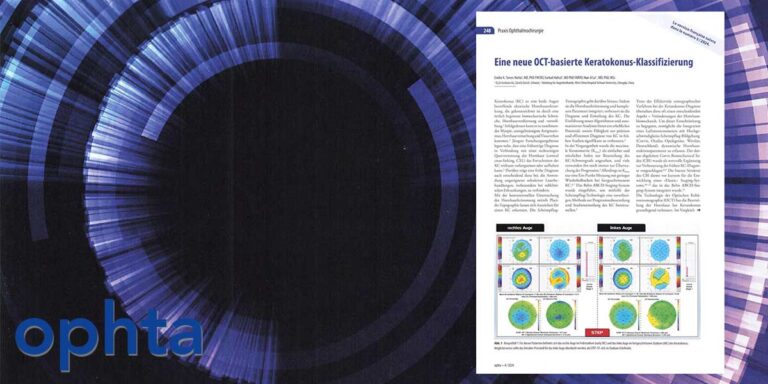
The STEP system utilizes two parameters: the minimum overall stromal thickness (ST) and the standard deviation of epithelial thickness (EP). This approach provides a more detailed understanding of keratoconus progression, offering insights that may assist in clinical decisions, especially concerning corneal cross-linking (CXL) protocols.
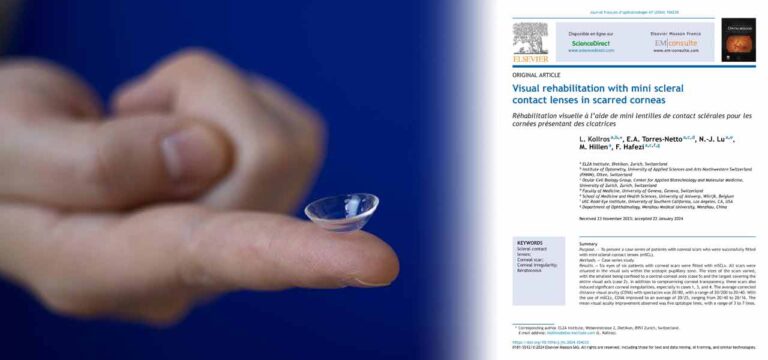
By offering a non-surgical option that improves vision and comfort, mini scleral contact lenses can enhance the quality of life for patients with otherwise challenging visual impairments. Future research could further explore long-term outcomes and compare mini scleral contact lenses with other rehabilitative options to solidify their role in ophthalmic care.
When considering eyelid surgery, choosing an oculoplastic surgeon ensures specialized care for both cosmetic and functional outcomes. With extensive training in ophthalmology and plastic surgery, oculoplastic surgeons offer unparalleled expertise in the periorbital region. Discover why an oculoplastic surgeon should be your top choice for safe, precise, and aesthetically pleasing results.
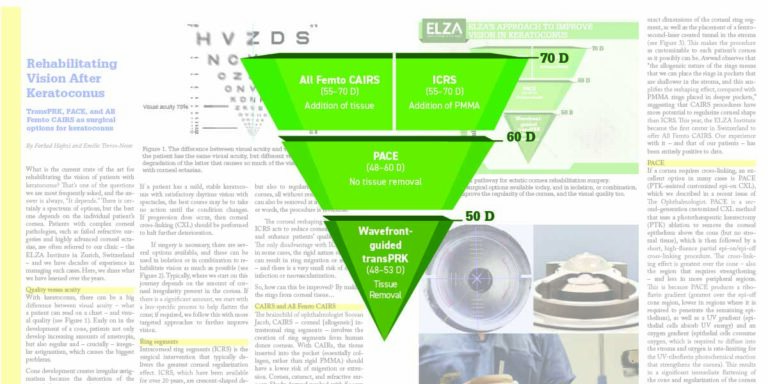
Discover the latest advancements in keratoconus treatment with the ELZA Institute’s innovative techniques: transPRK, PACE, and All Femto-CAIRS, as featured in The Ophthalmologist.
In a recent publication in “Ophta,” Dr. Emilio Torres-Netto, Prof. Dr. Farhad Hafezi, and Dr. Mark Hillen present a review on the application of a well-established antihypertensive medication, losartan, for treating corneal opacities.