
ELZA Expertise Featured in DGII aktuell
DGII aktuell features ELZA Medical Director Prof. Farhad Hafezi on modern corneal cross-linking strategies.

DGII aktuell features ELZA Medical Director Prof. Farhad Hafezi on modern corneal cross-linking strategies.

CRST explores how artificial intelligence is improving ophthalmic diagnostics, with insights from ELZA’s Prof. Farhad Hafezi.
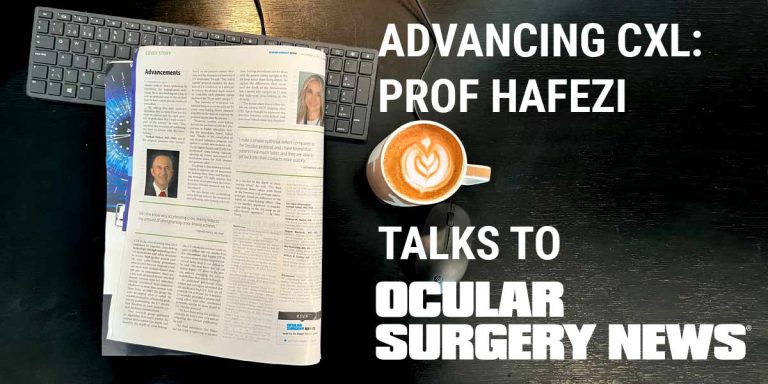
Prof. Farhad Hafezi, MD, PhD, FARVO is the Medical Director at The ELZA Institute, was recently interviewed by Ocular Surgery News (OSN), where he spoke about advancing CXL technology for the treatment of corneal ectasias like keratoconus. The interview covered three main topics.
An article by Prof. Farhad Hafezi, MD, PhD, FARVO, Medical Director of the ELZA Institute, published in the November/December issue of Cataract and Refractive Surgery
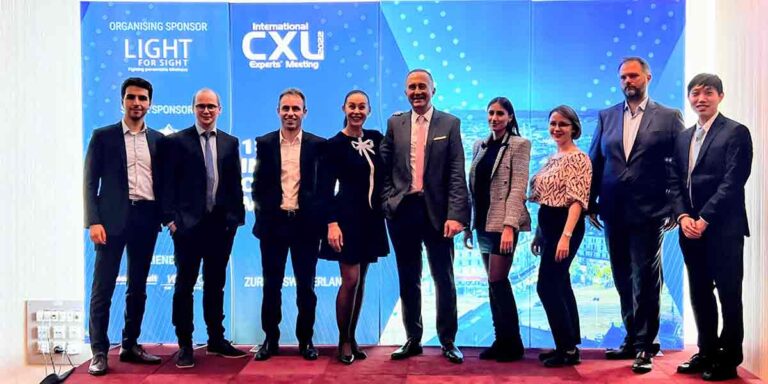
The 18th CXL Experts’ Meeting, led by ELZA’s CMO, Prof. Farhad Hafezi, was held last weekend in Zurich, Switzerland.
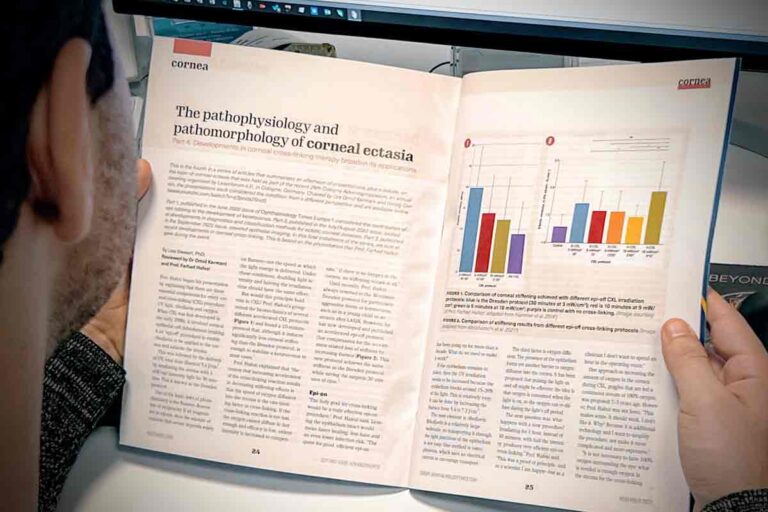
This month’s issue of Ophthalmology Times Europe saw the publication of a review article, “The pathophysiology and pathomorphology of corneal ectasia” authored by Prof. Hafezi, Medical Director of the ELZA Institute, and Dr. Omid Kermani, Managing Director at Augenklinik am Neumarkt in Cologne.
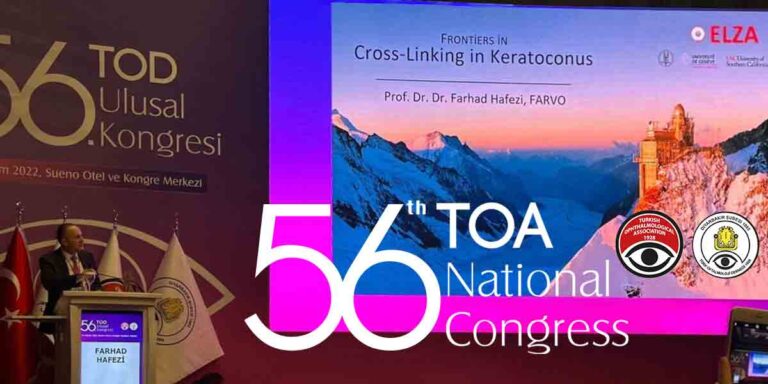
ELZA’s Medical Director, Prof. Farhad Hafezi has returned from Antalya, Turkey, where he gave a lecture entitled “Frontiers in Cross-Linking in Keratoconus” to the delegates of the

The advantages of performing corneal cross-linking (CXL) at the slit lamp are well established. It brings CXL out of the operating theater, to anywhere where

The ELZA team of surgeons and researchers were all in attendance, and today saw Prof. Hafezi give the attending delegates a lecture on “How to treat thin corneas”, where he examined the history of performing corneal cross-linking (CXL) for the treatment of corneal ectasias like keratoconus. He then brought delegates up-to-date on the research that has been performed over the years to improve how thin corneas are cross-linked. Finally, Prof. Hafezi demonstrated the results of the latest thin cornea cross-linking protocol, sub400, developed by ELAZA, which simplifies the process, and can let surgeons, for the first time, cross-link corneas that are as thin as 200 µm.
The ELZA team of surgeons and researchers were all in attendance, and today saw Prof. Hafezi give the attending delegates a lecture on “How to treat thin corneas”, where he examined the history of performing corneal cross-linking (CXL) for the treatment of corneal ectasias like keratoconus. He then brought delegates up-to-date on the research that has been performed over the years to improve how thin corneas are cross-linked. Finally, Prof. Hafezi demonstrated the results of the latest thin cornea cross-linking protocol, sub400, developed by ELAZA, which simplifies the process, and can let surgeons, for the first time, cross-link corneas that are as thin as 200 µm.