
Corneal cross-linking is a treatment designed to strengthen the cornea when it is becoming weaker and more unstable, most commonly in keratoconus and other corneal ectasias. It works by combining riboflavin (vitamin B2) and UV-A light to create new chemical bonds within the cornea, helping it resist further shape changes.
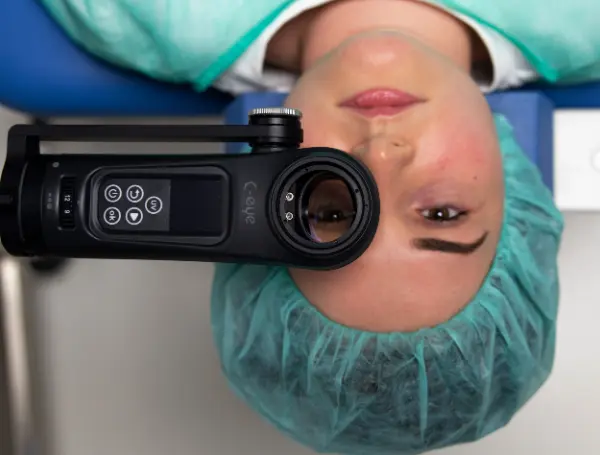
To strengthen the cornea and help stop progressive ectasia from getting worse.
Patients with progressive keratoconus, post-LASIK or post-PRK ectasia, and some other corneal ectasias.
Usually an outpatient procedure.
Depends on the protocol. Epi-on is faster to recover from, while epi-off involves longer epithelial healing.
Corneal cross-linking is designed to solve a very specific problem: a cornea that is becoming biomechanically weaker and progressively changing shape. In keratoconus and corneal ectasia, the cornea can thin and bulge forward over time, leading to worsening distortion and reduced visual quality. Cross-linking helps make the cornea stiffer and more resistant to further deformation.
This is important because many patients assume every treatment is meant to “fix vision.” Cross-linking is different. Its main purpose is to preserve the eye’s future by slowing or stopping progression. Vision may improve in some patients, but the primary goal is stabilization.
When
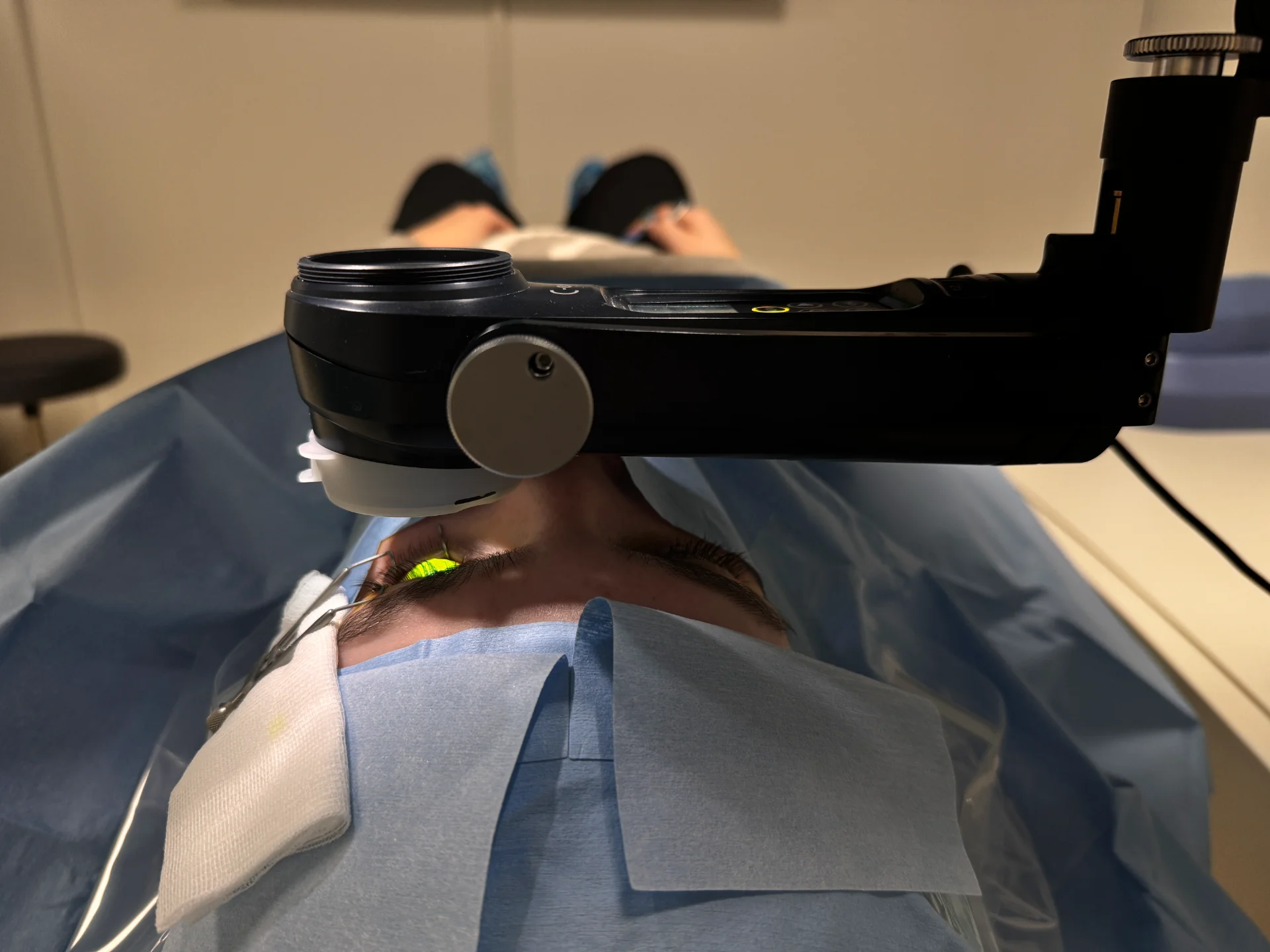
Timing matters. Cross-linking is generally most valuable when progression is identified early enough to preserve corneal structure before more advanced distortion develops. Mayo Clinic notes that cross-linking may reduce the risk of progressive vision loss by stabilizing the cornea early in the disease.
In practice, this means the treatment is usually not offered simply because someone has keratoconus. It is offered because the cornea appears to be getting worse. In children and younger patients, this decision may be made earlier because progression can be more aggressive. ELZA’s current page also notes that the most powerful epi-off approaches are still reserved for situations where maximum biomechanical effect is needed, such as particularly aggressive disease in children.
How
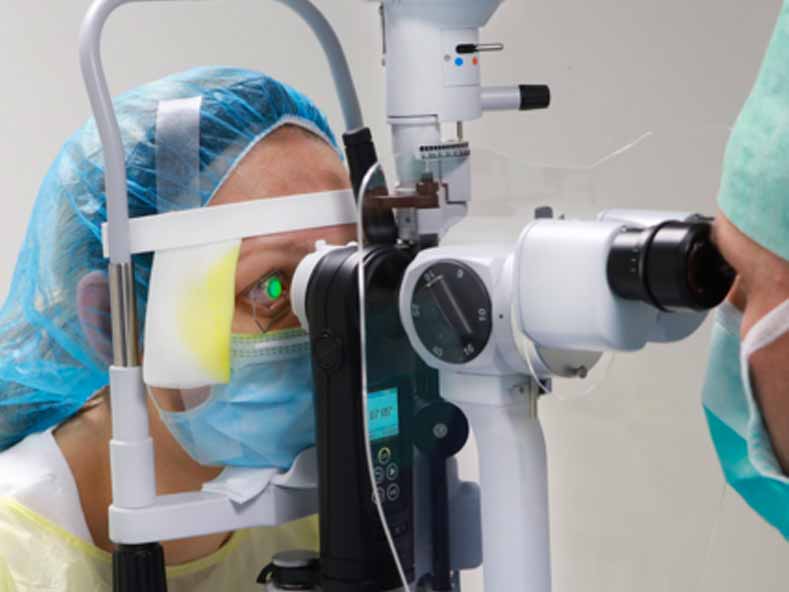
Cross-linking combines riboflavin eye drops with UV-A light. Together, they trigger a photochemical reaction inside the corneal stroma, the main structural layer of the cornea. This reaction creates new cross-links between collagen molecules, binding them more tightly together and making the cornea mechanically stronger. ELZA’s current page states that this stiffening effect is immediate and that the cornea becomes substantially stiffer after treatment.
ELZA’s page also explains that cross-linking has effects beyond mechanical stiffening. UV-A activated riboflavin can generate reactive oxygen species with antimicrobial effects, and the cross-linking process can increase resistance to enzymatic digestion and may reduce corneal swelling. These added effects are part of why cross-linking technology is also relevant in fields such as infectious keratitis treatment.
Eye drops are used to numb your eye, so the treatment is mostly comfortable.
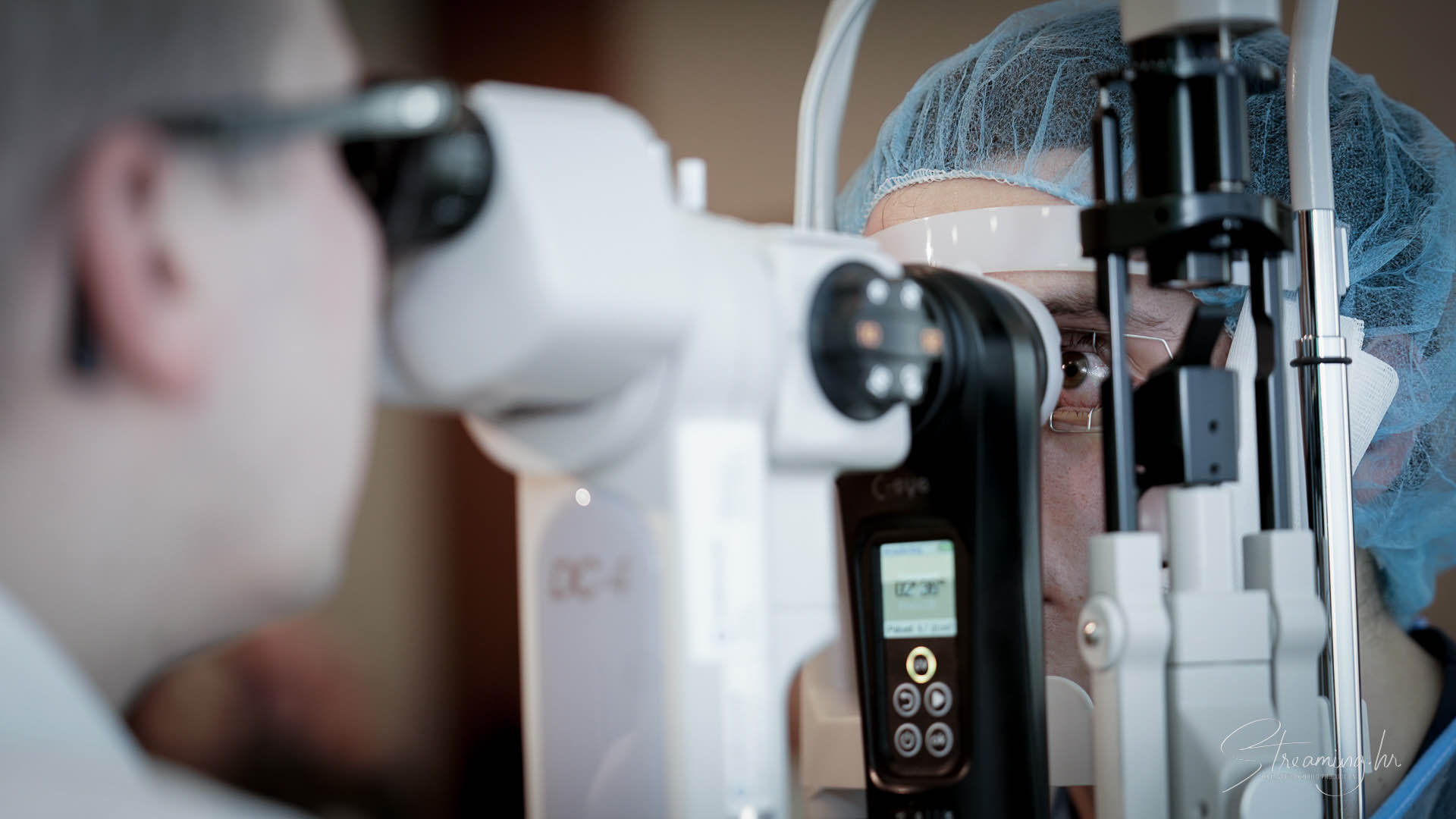
You will be seated either lying down or at a slit lamp, depending on the technique used.
The entire process takes around 45 minutes to one hour, again depending on the technique used.
Recovery
Recovery after corneal cross-linking depends mainly on which protocol is used. In general, epi-on cross-linking is associated with a smoother early recovery because the surface layer of the cornea stays in place, while epi-off cross-linking usually involves more discomfort and a longer healing period because the epithelium has to grow back.
Is it Safe?
CXL’s safety has been demonstrated time and time again in many studies. Currently (as of May 2025), more than 3,000 peer-reviewed scientific articles can be found in the medical database, and our group has contributed over 160 of them.
A major safety principle in traditional CXL is protecting the corneal endothelium by ensuring enough riboflavin-soaked tissue remains between the UV treatment zone and the deepest cell layer.
The main limitation is that cross-linking is primarily a stabilization treatment. It does not guarantee better unaided vision, and it does not eliminate the need for other treatments such as specialty contact lenses or, in more advanced cases, additional corneal procedures. Also, not every protocol is equally effective in every clinical situation.
The beneficial side-effect of the corneal strengthening that CXL achieves is that it can reduce corneal edema, helping the cornea to maintain its shape and clarity, and ultimately, patients’ visual acuity.
Treatment
Over the years CXL for keratoconus and other corneal ectasias has evolved, and today various protocols exist. The treating ophthalmologist needs to assess which technique is scientifically sound enough to be used on a case-by-case basis.
Here are the CXL-for-ectasia treatment approaches available today:
Why us?
At ELZA, cross-linking is not just one treatment among many. It is one of our defining areas of expertise. Our current CXL page states that Prof. Farhad Hafezi was part of the Zurich team that developed the first UV irradiation lamp used for clinical cross-linking, and the page emphasizes ELZA’s long-standing role in the scientific development of the field.
We also do not treat cross-linking as a one-size-fits-all procedure. ELZA’s own pages explain that the treating ophthalmologist must understand the full range of scientifically sound protocols and decide which approach is appropriate on a case-by-case basis. That includes epi-off, accelerated approaches, and evolving epi-on methods, as well as customized treatment pathways such as ELZA-PACE. Our institute also highlights dedicated support for international patients and online consultations, making specialist access easier for patients traveling from abroad.
CXL treatment benefits from strong experience with the corneal surface, not only basic excision.
ELZA highlights published expertise and international reputation in cornea and ophthalmology.
ELZA offers dedicated pathways for international patients and online video consultations.
FAQs
Cross-linking is a method of mechanically stabilizing and remodelling the cornea using Vitamin B₂ (riboflavin) and ultraviolet A (UV-A) light.
CXL increases the number of cross-links between the collagen fibres of connective tissue of the cornea, thereby strengthening it.
By way of an analogy, think about the Eiffel Tower. The structure would be far less stable without the iron elements criss-crossing the long vertical metal structures that binds the entire tower together.
We have one of the longest clinical experiences worldwide. Members of the ELZA Institute have been instrumental in introducing CXL technology into clinical practice since 2002. ELZA member Prof. Farhad Hafezi and his research group have published more than 120 scientific papers on CXL so far, and Prof. Hafezi is considered a pioneer of this technique. In 2014, he was honoured with the ARVO’s (Association for Research on Vision and Ophthalmology) prestigious Carl Camras Award for Translational Research, for his research in this field.
Prof. Hafezi co-founded the International Cross-Linking Congress and co-organized it since its inception in 2006. He is the publisher of the most comprehensive CXL textbook: “Corneal Cross-Linking”, published by Slack, Inc, New York. A literature analysis study, published in 2022, showed that Farhad Hafezi is the world’s top-ranked author in terms of CXL publications.
Members of the ELZA Institute were the first to use CXL in the postoperative treatment of ectasia after LASIK / PRK, in very thin corneas, and for infectious keratitis.
In addition to scientific expertise, patients from all continents are treated at the ELZA Institute using the latest scientifically proven CXL technique.
No. Cross-linking has been used clinically in other areas of medicine since the 1980s (orthopaedic surgery, ear, nose, and throat surgery, cardiac surgery). In ophthalmology, CXL has been performed since 2001.
The CXL treatment for keratoconus is used in over 160 countries, including the EU and the US. The world’s longest experience exists in Dresden and Zurich. CXL is now considered the gold standard for stopping keratoconus progression.
Yes. Cross-linking of the cornea is achieved through a combination of UV-A irradiation and riboflavin eye drops (Vitamin B₂). The intensity of the radiation was already determined 20 years ago in numerous experiments so that no deeper eye structures can be damaged. The method has been used clinically since 2002, and Farhad Hafezi from the ELZA Institute is one of the world’s most experienced CXL experts.
Scientific publications show that CXL has a high safety profile in children, comparable to that of adults.
The greatest risk is a corneal infection in the first few days after cross-linking. But this is minimized by antibiotics after surgery. This risk is less than 0.1% in our patients.
If you are an adult patient and cross-linking surgery has been recommended, this is because your disease is progressing. CXL surgery is not typically recommended if a person’s ectasia is stable. If your disease is progressive, then your cornea will continue to thin, your vision will continue to worsen, and it is likely that you will eventually require a corneal transplant.
If you are a child or adolescent, then it is recommended that you receive CXL as soon as possible, as in children, corneal ectasias (in this case almost exclusively keratoconus) tend to be aggressive and progress rapidly. The consequences of non-treatment are the same as in adults.
For these conditions, it is recommended that you receive CXL as soon as possible.
The costs of standard epi-off cross-linking for progressive keratoconus in Switzerland are, in principle, covered by health insurance, although as this announcement is so recent, we do not know the extent of the coverage.
If we receive enough information from you before the examination, the examination can take place on the morning of the operation and the operation in the afternoon. Often, patients from abroad arrive on Sunday. We then do the examination on Monday mornings, the surgery on Monday afternoon, and see you every day until Friday. You can leave on Saturday.
We can safely perform a bilateral CXL procedure if needed. In this case, you are required to stay for 7 days (from Monday to Monday morning of the following week).
No, this is not necessary. You can stay in a hotel nearby. We work with several hotels and are happy to help arrange accommodation for you.
We will send you a quote to give you an accurate picture of the costs. Please contact us directly.
You may pay in cash, by bank transfer, or by credit card. Please understand that we will ask that the sum be paid before the operation.
As contact lenses can change the shape of your cornea, it is essential that you do not wear your contact lenses for two weeks before the appointment. Only then can we accurately measure the extent of keratoconus and determine whether your keratoconus is progressive or not. This is also the only way we can confirm after cross-linking whether the keratoconus has actually come to a standstill. We are aware that this is a long time for people who are mostly young and working, but two weeks is absolutely the bare minimum.
All older documents are valuable and should be collected as far as possible and brought to the examination: old prescription glasses, old corneal topographies, and even old lenses.
See above. Two weeks is the absolute minimum. In principle, contact lenses should be discontinued for a full twelve weeks before the examination to obtain an absolutely unadulterated image of the cornea. The reason is that contacts change the shape of your cornea and makes our measurements inaccurate, thereby interfering with your precision treatment. Two weeks is the bare minimum we need to make an accurate statement on the state of your cornea.
The goal of the classic CXL surgery is to stabilize the keratoconus. We cannot heal the disease, but we can “freeze” the current condition and prevent it from progressing even further. When using a customized approach, we even manage to reverse the ectasia to a certain degree. However, this can’t be guaranteed in advance.
In a second step, a few months after the surgery, measures to improve the sight can be taken. Whether this might be special contact lenses and/or additional laser treatment depends on the state of each patient’s cornea.
No, that is not necessary.
All cross-linking surgeries are performed by Prof. Hafezi or Dr. Torres.
The eyes are held open by a lid speculum. This is perhaps unusual for patients to experience, but causes no pain.
No. You will not feel pain during the operation.
A total of 45 to 70 minutes, depending on the technique used.
Yes, CXL can be repeated. This is especially necessary if a first CXL has not led to stabilization. This occurs in 3 to 10 percent of the surgeries. In rare cases, a second CXL after pregnancy or additional thyroid disease may be necessary.
The shortest period we can wait between performing each operation is one week.
It is an advantage if you are accompanied during the day of the procedure, as your vision will be limited afterward, and the use of public transport may prove risky. Please note that you are not allowed to drive a car for at least one week after the surgery or until your vision has improved to a point where a professional can declare you as being “safe to drive”.
“Dresden protocol” CXL is the original protocol that takes 30 minutes of irradiation. Before irradiation, the epithelium (outer layer of the cornea) is removed.
These are CXL irradiation protocols that deliver the same total energy as the “Dresden protocol”, but in less time, using higher intensities. Before irradiation, the epithelium (outer layer of the cornea) is removed.
These are CXL irradiation protocols that deliver higher total energy than the classic “Dresden protocol”. Typically, before irradiation, the epithelium (outer layer of the cornea) is removed.
In epi-on cross-linking, the outer layer of the cornea, the epithelium, is not removed. The advantages are obvious: less pain and a faster recovery. The early attempts to perform epi-on CXL (2011 to 2020) were not very successful and it was again our research team that found out why: oxygen is a central element of the CXL process and an intact epithelium blocks oxygen transport. Our research team has performed more than a decade of research to optimize epi-on CXL and our current epi-on CXL protocol is the first in the world requiring neither additional oxygen nor iontophoresis to perform effective epi-on CXL.
Cross-linking is not a “single method” anymore. Which technique is chosen depends on a multitude of factors: the stage of your keratoconus, your visual acuity, your refraction, your age, and so on.
In general, there are two scenarios:
We will give you an exact medication schedule and all the medication you need. To minimize glare, you should wear sunglasses outside, which you will also get from us.
During the day, no actual bandages are required. You will only have a soft “bandage” contact lens to protect the surface of the eye in the days after surgery.
At night, however, you will have to wear an eye shield to stop you from rubbing your eyes when you are asleep.
You will feel a certain degree of discomfort after the procedure. The degree of discomfort depends on the CXL method performed and this level is different from one individual to another. Please note that the youngest patients we treat under local (eye drops) anaesthesia with our clinical protocol are 9 to 10 years old, and they tolerate the procedure quite well.
Yes. Even if you do not feel any pain, the pills are prescribed to reduce not just pain, but also inflammation. Inflammation can slow and impair the recovery process, and you must take the prescribed medications as directed by your physician to ensure the best possible recovery.
Yes, for up to 6-8 weeks. We will prescribe artificial tears, which you can use as often as necessary.
Above all, the bandage contact lens is for your comfort and is not strictly medically necessary. Should you lose them, continue with the drops and, before going to bed, put some of the ointment that you received from us in the eye. We will carry out the check the following day as usual.
After surgery, you must not rub your eyes at all. Rubbing can irritate the eyes, cause inflammation, and it increases the risk of infection during the period that the eye is healing. Furthermore, you may injure the top layer of the cornea, which causes pain and prolongates the healing process.
In general, it is recommended not to rub one’s eyes at any time, as eye rubbing has been linked to ectasia progression.
Usually one week for 100%. If necessary, we will extend it to 10 or 14 days.
In the first week you can do almost all activities, e.g. light fitness, jogging, being in the sun, etc., with one exception: no water should reach the eye (shower water, swimming pool, lake). From a medical point of view, you can safely spend the first few days after surgery in front of a screen, but you will probably get a headache.
At 5 Days after the CXL, when the risk of infection is usually over. However, we might advise you to wait longer if your cornea is still at risk of infection through tap water.
Sport (except swimming) is possible after one week without any restrictions. Please refrain from swimming for two weeks. For the first five days please do not let shower water get near your eye, so do not wash your hair and face. Showering up to the neck is possible at any time. Make-up is possible after one week. Please dab at make-up removal, do not rub firmly.
This is not possible for the first week after the operation. After one week it depends on how your visual acuity develops.
The controls take place daily for the first 4 days, then after one week, 4 weeks, 3, 6, and 12 months, then annually. Depending on your age, the exact diagnosis, and the stability of your cornea, the interval might be prolonged to 18 or 24 months after a few years. Lifelong monitoring is important to enable us to act quickly, should the disease start to progress again.
Immediately after the operation, your vision is blurry. However, you should be able to orient yourself in a room at any time.
In the first 4-5 days, the view is still blurry, then it gets better with each passing day. After about 14 days your eyes achieve about 70-80% of what they did before the operation. Then a fine mist might appear in the view, but this should not frighten you. It manifests because of long-term healing effects and will be noticeable for a few weeks, without significantly affecting your vision. As a rule of thumb, the mist will be gone and vision will be restored after no longer than 6 months after surgery.
In classic CXL (Dresden protocol, and also certain accelerated protocols), the aim is to stop the progression of the disease. However, as a side-effect of the corneal strengthening that occurs during cross-linking, some corneas may become flatter. If this does occur, it tends to result in more symmetry and may improve patients’ quality of vision. The extent of flattening of the cornea or any potential improvement after cross-linking is not predictable beforehand and the dioptres in your glasses might change.
When the customized CXL PACE method is performed, the aim is not to stabilize keratoconus, but rather to improve your vision by selectively flattening the cornea. For this reason, we also perform PACE in corneas that show stable keratoconus.
Yes, absolutely, for the 6-month inspection. Only then can we tell you if the cross-linking operation was successful, that is, if the keratoconus has come to a standstill.
You can fly again from the fifth day after the operation. The eye should be well moistened because of the dry cabin air.
As a rule, contact lens wear is possible 3-4 weeks after the treatment.
The cornea reacts very slowly. Only after 6 months can it be clearly judged whether CXL was successful.
Get in touch
During office hours.
Email us.
Make an appointment, and come to see us.
Thank you for writing a review on google.
Contact us here, we will get in touch with you.
Zoom online consultation for our international patients.
Contact us here, we will get in touch with you.
Contact us here, we will get in touch with you.
Stay informed & get the newsletter
You have successfully joined our subscriber list.
Newsletter abonnieren & informiert bleiben
Sie haben sich erfolgreich in unsere Abonnentenliste eingetragen.
Bitte bestätigen Sie Ihr Abonnement, indem Sie auf den Link in der E-Mail klicken, die wir Ihnen gerade geschickt haben.