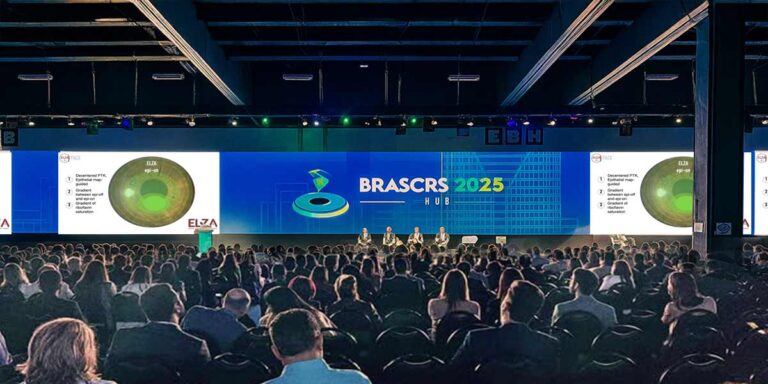
ELZA-PACE Cross-Linking and more at BRASCRS 2025
Dr. Emilio Torres-Netto presented ELZA-PACE cross-linking at BRASCRS 2025, a customised, tissue-preserving keratoconus vision rehabilitation method with promising clinical outcomes.

Dr. Emilio Torres-Netto presented ELZA-PACE cross-linking at BRASCRS 2025, a customised, tissue-preserving keratoconus vision rehabilitation method with promising clinical outcomes.

Accurate corneal topography depends as much on correct interpretation as on advanced technology. A recent ophta overview revisits the fundamentals that guide reliable clinical decision-making.

CAIRS for keratoconus: Prof Hafezi and Dr. Torres-Netto are featured in Ocular Surgery News, in which CAIRS experts highlight its role in rehabilitating highly irregular corneas.

In March 2025, Tashkent became the focal point for ophthalmology innovation as it hosted the Second International Conference on Innovative Technologies in Ophthalmology.
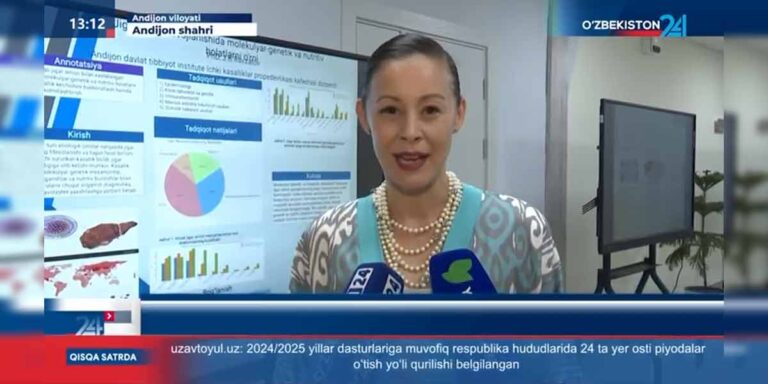
ELZA’s CEO, Nikki Hafezi launches a keratoconus screening initiative for children with Down syndrome in Uzbekistan, beginning in Andijan.
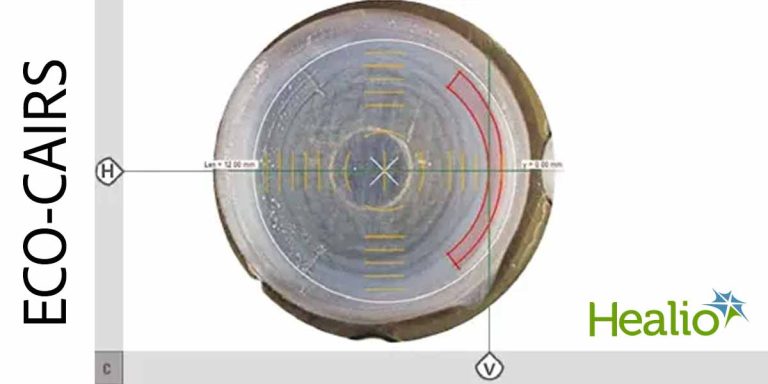
ECO-CAIRS extends tissue-based keratoconus surgery by optimizing allogenic ring segments through extracorporeal cross-linking.

Who is the best eye doctor in Zurich? In Switzerland? In the world? While such questions are subjective, peer recognition provides meaningful insight. The Ophthalmologist’s Power List 2025 highlights the individuals who are currently shaping the future of eye care. Among them is Prof. Farhad Hafezi, MD, PhD, FARVO, recognized for […]

At EgSCRS, ELZA’s pyramid approach to keratoconus: ELZA-sub400, PACE, ECO-CAIRS, and AI-guided diagnostics was presented in detail.

As part of the 70th Anniversary celebration of the Andijan State Medical Institute (ASMI) in Uzbekistan, ELZA Institute CEO, Nikki Hafezi, MAS IP ETHZ, took part in a series of high-level academic and institutional events from April 28 to May 1, 2025.

Hafezi addressed the widespread reliance on a 1986 prevalence estimate that places keratoconus at 1 in 2,000—formally classifying it as rare. Yet as she highlighted, emerging epidemiological data tell a starkly different story. Keratoconus is an orphan disease, not a rare one.