
Corneal cross-linking is one of the defining fields of ELZA Institute. Our role in this area is not limited to treating patients with keratoconus and corneal ectasia. We have helped shape how cross-linking is understood, studied, taught, and advanced worldwide.
From the early development of clinical cross-linking in Zurich to today’s work in customized protocols, thin-cornea treatment, epi-on innovation, and global education, ELZA has played a leading role in moving the field forward. This page explains that role.
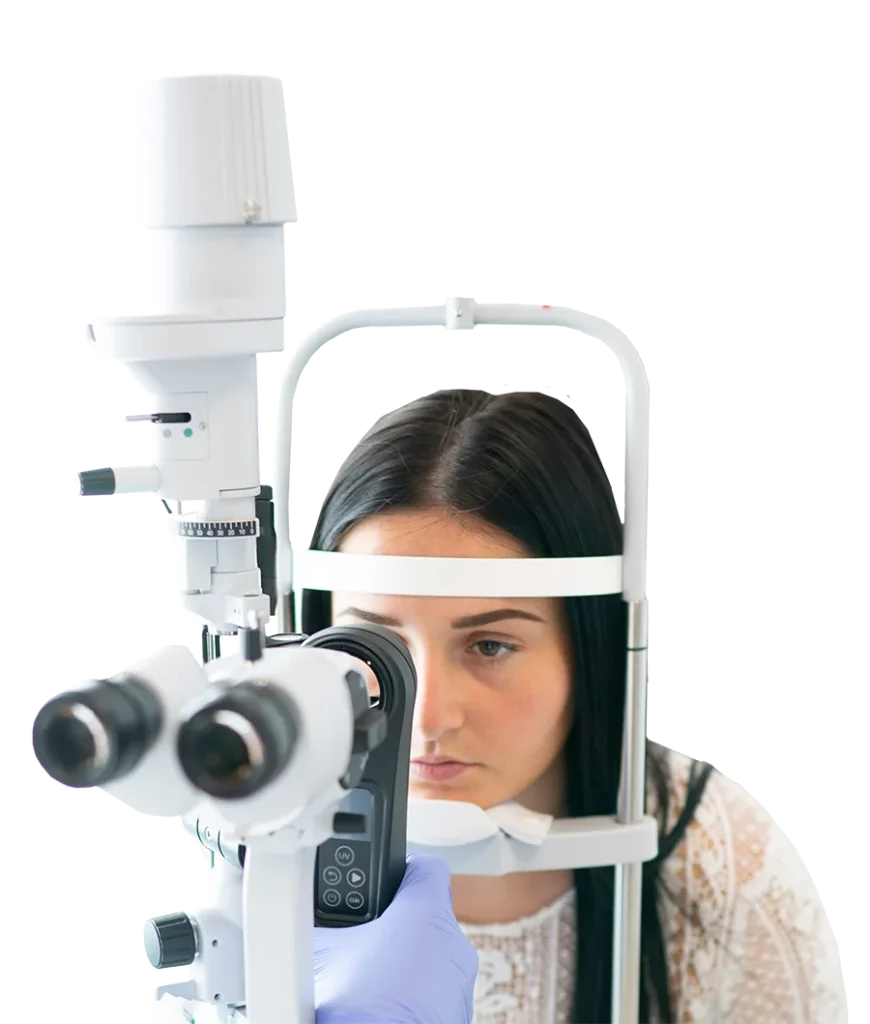
Our team is presented as a global leader in CXL research, as organizer of the world’s largest cross-linking congress, and as co-author of the most comprehensive textbook in the field.
These are not only academic distinctions. They reflect something more important: ELZA is part of the conversation that shapes the future of corneal cross-linking worldwide. We do not simply follow protocol changes after they happen elsewhere. We help define the direction of the field.

Warum Sie ELZA wählen sollten
Die Geschichte begann 2003 in Zürich; Hafezi schloss sich einem Team an, das Pionierarbeit im Bereich des Hornhaut-Crosslinking leistete.
ELZA ist weltweit führend in der CXL-Forschung mit hochrangigen und viel zitierten wissenschaftlichen Ergebnissen.
ELZA-Mitglieder organisieren den weltgrößten CXL-Kongress, der Experten für eine globale Zusammenarbeit zusammenbringt.
Unser Team ist Mitautor des weltweit führenden CXL-Lehrbuchs, das bald in der dritten Auflage erscheint.
ELZA hat die Spaltlampen-CXL und das C-Augen-Gerät entwickelt - innovative, auf den Patienten zugeschnittene Behandlungslösungen.
CEO Nikki Hafezi erweitert den Zugang zu CXL weltweit durch Behandlung, Schulung und Lobbyarbeit.
Mehr erfahren
Cross-linking is no longer one fixed treatment. Over time, it has evolved into a family of approaches, each designed for different clinical challenges. A major part of ELZA’s contribution has been helping move the field from “one protocol for all” toward more precise, situation-specific treatment planning.
This includes work in:
At ELZA, we see cross-linking as a platform, not a single formula.
Der Grund, warum die Technik "Cross-Linking" genannt wird, liegt darin, dass das UV-Licht mit dem Riboflavin interagiert, um "reaktive Sauerstoffspezies" in der Hornhaut zu erzeugen, die sofort mit den Kollagenfasern in der Hornhaut reagieren und chemische Verbindungen zwischen ihnen schaffen, sogenannte Cross-Links. Dies macht das Hornhautgewebe stärker und fester, so dass es dem Augeninnendruck, der die schwachen Teile der Hornhaut zum Vorwölben brachte, besser standhalten kann. Bis zur Einführung des Cross-Linkings war die einzige Behandlungsmöglichkeit eine Hornhauttransplantation. Das Cross-Linking ist also ein grosser Fortschritt und eine Transplantation ist nur noch in den allerschwersten Fällen nötig.
Lesen Sie mehr...CXL
One of the most important challenges in cross-linking has been how to treat very thin corneas safely. Traditional protocols have limitations because the cross-linking effect must remain within a safe depth to protect the endothelium.
ELZA’s work in this area led to the development of ELZA-sub400, a customized approach for very thin corneas. Rather than applying a single fixed irradiation pattern to every patient, this method adjusts treatment according to the thinnest measured point of the cornea, allowing treatment planning to be individualized while preserving a safety margin.
This is a strong example of how ELZA’s role in cross-linking goes beyond standard treatment delivery. It reflects the institute’s contribution to solving one of the field’s most important clinical problems.
Another major area of ELZA’s work has focused on epi-on cross-linking. Early transepithelial approaches were attractive because they promised greater comfort and faster recovery, but their clinical effect often failed to match traditional epi-off treatment.
Our researchers identified oxygen as a crucial factor in the cross-linking reaction and worked to better understand how riboflavin delivery, UV exposure, and oxygen availability interact when the epithelium is left in place.
That work matters because it reflects a deeper scientific contribution. Instead of treating epi-on CXL as a lighter version of standard treatment, ELZA approached it as a distinct biochemical and biomechanical problem that needed to be solved properly.
A major step forward in the field has been the idea that cross-linking may do more than stop progression. In selected cases, it may also be used in a more customized way to improve corneal shape and reduce irregularity.
ELZA-PACE is one example of that evolution. As presented on the current ELZA site, it is a customized cross-linking strategy designed to achieve not only stabilization, but also significant flattening, improved symmetry, and better visual quality — all without removing corneal tissue as part of a refractive reshaping procedure.
This reflects a broader theme in ELZA’s work: cross-linking is not static. It continues to evolve from a purely defensive treatment into a more nuanced platform for corneal rehabilitation.
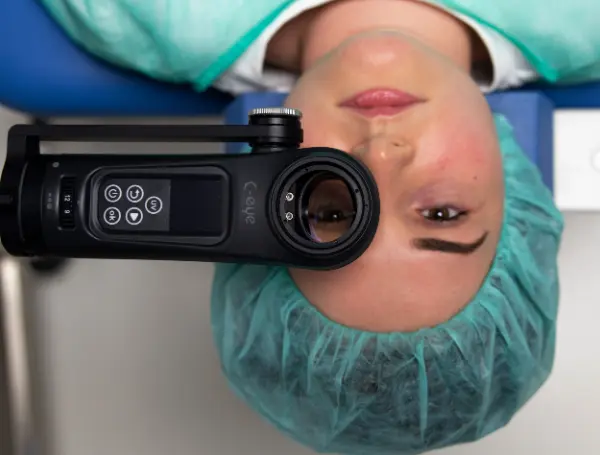
ELZA’s contribution has included not only protocols and publications, but also treatment tools designed around real clinical needs.
The work of our experts lead to creation of new technologies and devices, including slit-lamp CXL and the C-eye gerät.
That type of work reflects practical innovation: technology developed not in isolation, but in response to the problems specialists and patients encounter in everyday corneal care.
Scientific leadership matters most when it can be shared. ELZA’s current cross-linking section emphasizes our role in organizing the largest CXL congress and co-authoring the leading textbook in the field. Together, these contributions show that ELZA’s role is not limited to internal expertise. We are also deeply involved in educating and connecting the wider international community.
This matters because progress in ophthalmology depends on dissemination as much as discovery. A center of excellence does not only generate knowledge. It helps make that knowledge usable for others.
Kontakt aufnehmen
Während der Bürozeiten.
Mailen Sie uns.
Vereinbaren Sie einen Termin, und kommen Sie zu uns.
Wir bedanken uns für Ihre Zeit.
Nehmen Sie hier Kontakt mit uns auf, wir werden uns mit Ihnen in Verbindung setzen.
Zoom-Online-Sprechstunde für unsere internationalen Patienten.
Nehmen Sie hier Kontakt mit uns auf, wir werden uns mit Ihnen in Verbindung setzen.
Nehmen Sie hier Kontakt mit uns auf, wir werden uns mit Ihnen in Verbindung setzen.
Newsletter abonnieren & informiert bleiben
Sie haben sich erfolgreich in unsere Abonnentenliste eingetragen.
Newsletter abonnieren & informiert bleiben
Sie haben sich erfolgreich in unsere Abonnentenliste eingetragen.
Bitte bestätigen Sie Ihr Abonnement, indem Sie auf den Link in der E-Mail klicken, die wir Ihnen gerade geschickt haben.